Residential vs Datacenter Proxy
When people talk about proxies, the conversation almost always comes down to two types: residential proxies and datacenter proxies. On the surface, the difference may seem technical, but in practice it affects everything—from speed and cost to block rates and long-term reliability.
This guide explains the difference between residential and datacenter proxies in plain language, focusing on how they behave in the real world and why one may work better than the other depending on your use case.
Residential and Datacenter
The core difference between these two proxy types is where the IP address comes from.
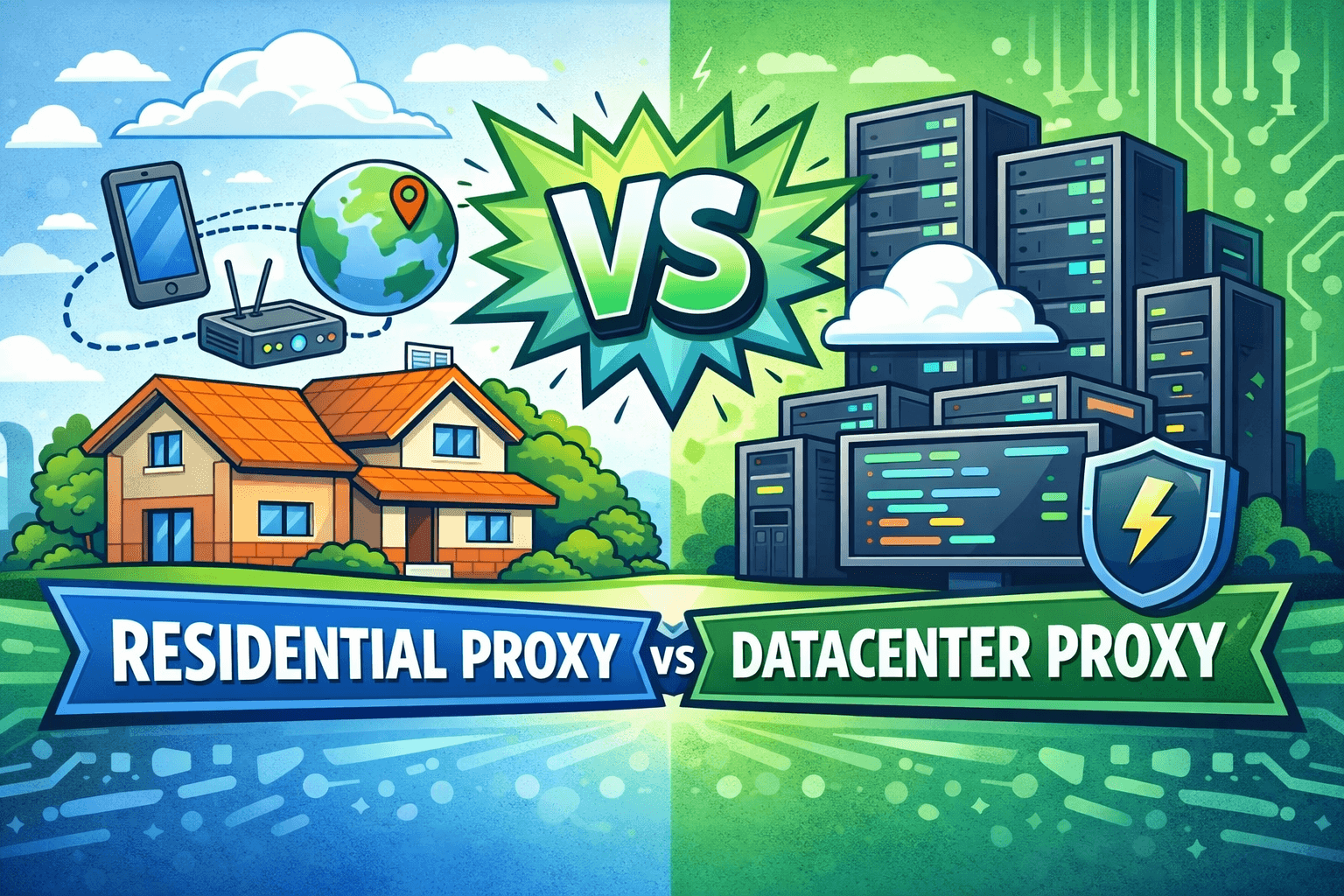
A residential proxy uses an IP address that belongs to a real household internet connection. These IPs are issued by internet service providers and are normally assigned to everyday users browsing from their homes or mobile devices.
A datacenter proxy, on the other hand, uses an IP address hosted on a cloud server or data center. These IPs are not linked to real homes or consumer ISPs—they exist purely on server infrastructure.
That single distinction changes how websites treat your traffic.
Residential Proxies
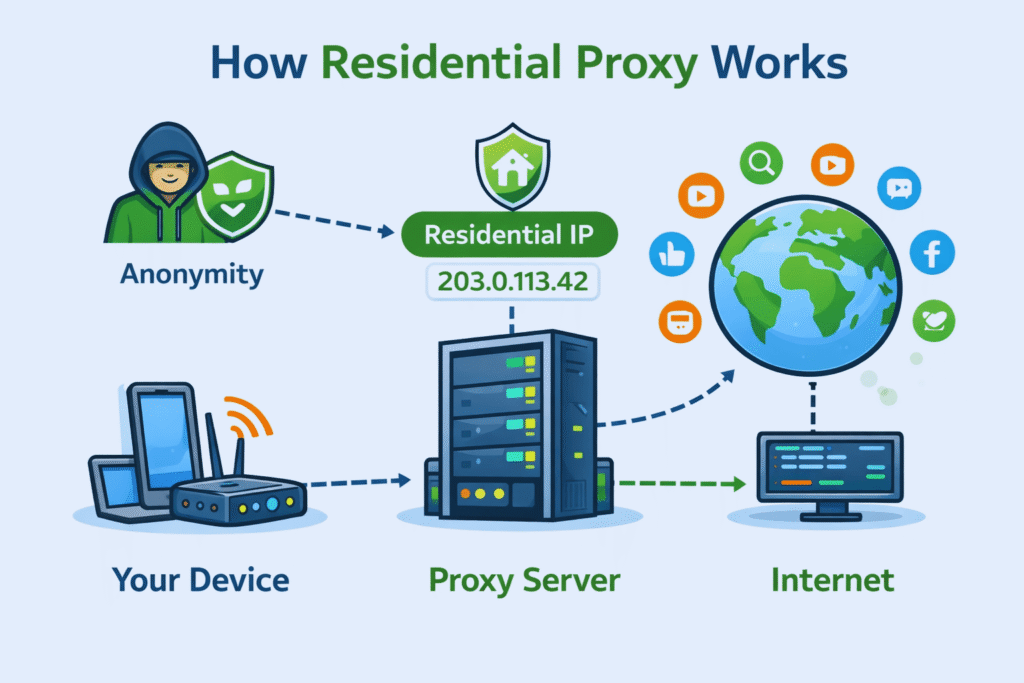
Residential proxies blend into normal internet traffic because, from a website’s point of view, they are normal internet traffic. The requests appear to come from real users using home internet connections, often in specific cities or regions.
Because of this, residential proxies are trusted far more than any other proxy type. They rarely trigger automated security systems, and they work well on platforms that aggressively monitor traffic patterns.
This is why residential proxies are commonly used for tasks where detection matters. Websites like search engines, social media platforms, e-commerce sites, and sneaker stores tend to allow residential IPs to operate freely, as long as the behavior itself remains reasonable.
The downside is cost. Residential proxies are typically priced by bandwidth and are significantly more expensive than datacenter proxies. They are also slightly slower, since traffic passes through real consumer connections rather than optimized servers.
Datacenter Proxies
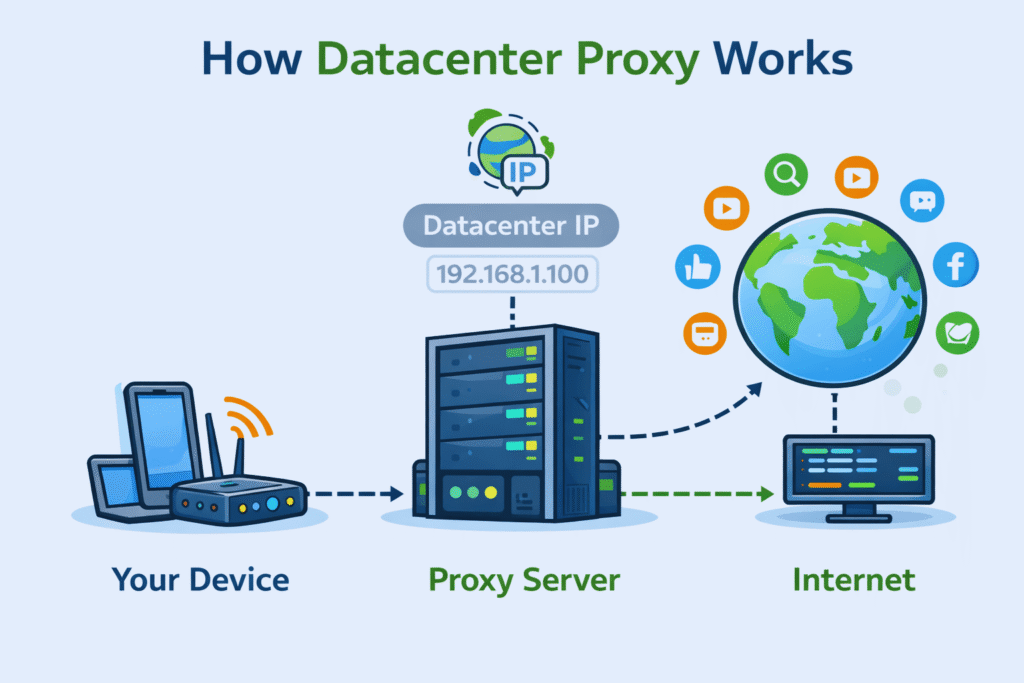
Datacenter proxies are designed for performance. Because they run on powerful servers with fast network connections, they can handle large volumes of traffic at very high speeds. This makes them ideal for scraping, crawling, and automation tasks that require scale.
However, websites can usually identify datacenter IPs very quickly. Entire IP ranges are associated with hosting providers, and many sites automatically flag or limit traffic coming from those networks.
This doesn’t mean datacenter proxies are “bad.” It simply means they work best on websites that do not enforce strict anti-bot measures. For public data, SEO tools, monitoring, and bulk requests, datacenter proxies are often the most efficient and cost-effective option available.
Residential Proxy vs Datacenter Proxy
From a technical standpoint, datacenter proxies are faster and cheaper. From a trust standpoint, residential proxies are far superior. This trade-off is the reason both proxy types continue to exist and remain widely used.
Residential proxies excel in environments where legitimacy matters. Datacenter proxies excel where speed, volume, and affordability are more important than disguise.
Neither proxy type is universally better—the “right” choice depends entirely on what you are trying to achieve.
Detection, Blocking, and Success Rates
Most modern websites rely on IP reputation systems. Residential IPs inherit the reputation of normal internet users, while datacenter IPs often share reputations with bots, scrapers, and automated tools.
As a result, residential proxies generally have much higher success rates on protected platforms. Datacenter proxies may work perfectly for days or weeks on some sites, and get blocked almost immediately on others.
This difference becomes especially noticeable when running automation at scale.
Pricing Differences
Residential proxies are expensive because they are scarce and trusted. Providers must maintain large networks of real IPs, which makes bandwidth valuable and limited.
Datacenter proxies are cheap because they are easy to generate, easy to replace, and hosted on infrastructure built for scale. This is why many datacenter proxy plans offer unlimited traffic at a fixed price.
In short, you pay for trust with residential proxies and efficiency with datacenter proxies.
When Residential Proxies Make More Sense?
- Residential proxies are the better option when:
- You are accessing heavily protected websites
- Account safety and longevity matter
- Geo-targeting accuracy is important
- Blocks and CAPTCHAs are costly to your workflow
- They are especially effective when success rate matters more than raw speed.
When Datacenter Proxies Are the Better Choice?
- Datacenter proxies are ideal when:
- You need fast, large-scale data collection
- The target websites are low to medium security
- Budget is a major factor
- You can tolerate occasional IP bans
For many scraping and monitoring tasks, datacenter proxies deliver the best performance per dollar.
Why Experienced Users Often Use Both
In real-world setups, many professionals use residential and datacenter proxies together. Residential proxies handle sensitive actions, while datacenter proxies take care of high-volume background tasks.
This hybrid approach reduces costs without sacrificing reliability and is commonly used in large-scale proxy operations.
Final Verdict
Residential proxies and datacenter proxies are built for different purposes. Residential proxies provide authenticity and low detection, while datacenter proxies offer speed and scalability at a lower cost.
Understanding the difference—and knowing when to use each—is what separates effective proxy usage from trial-and-error experimentation.
If you’re building a serious project or an authority site in the proxy space, mastering this distinction is essential.