Common Proxy Setup Mistakes That Cause Instant Bans
Proxy technology itself is rarely the reason accounts get banned or traffic gets blocked. In most real-world cases, the ban happens because of how the proxy is configured, not because a proxy is being used at all. Modern detection systems are less concerned with the simple presence of an intermediary IP and far more focused on consistency, behavior, and trust signals.
This distinction matters. Many teams invest heavily in high-quality proxy pools, only to see immediate bans due to configuration mistakes that undermine those assets from the first request. Understanding where setups go wrong—and why platforms react so aggressively—can be the difference between stable access and constant churn.
This article breaks down the most common proxy setup mistakes that cause instant bans, explains how detection systems interpret them, and contrasts bad setups with resilient, real-world configurations used in production environments.
Why Proxy Setup Matters More Than Proxy Type
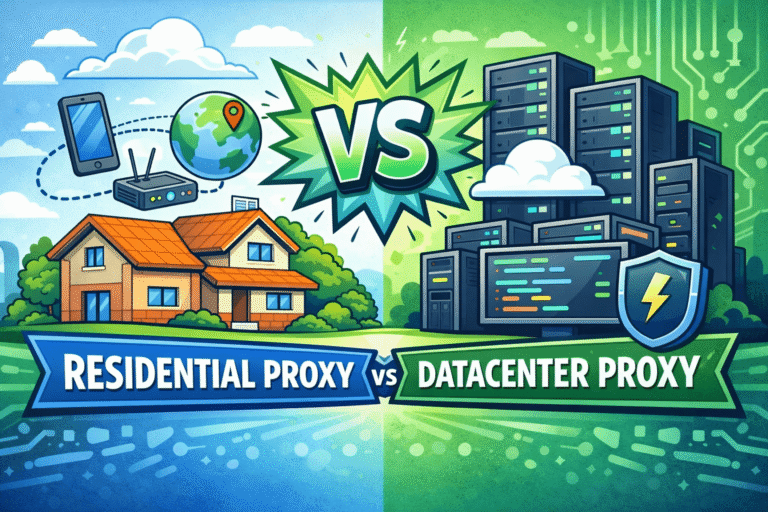
A common misconception is that bans are driven primarily by proxy category: datacenter vs residential, IPv4 vs IPv6, rotating vs static. In practice, these distinctions matter far less than signal alignment. Platforms evaluate whether traffic behaves like it belongs to a coherent user or system.
When a proxy setup introduces contradictions—network mismatches, unstable identity markers, or impossible behavior patterns—it creates friction. Enough friction, and the traffic is flagged before it ever has a chance to blend in.
Well-configured datacenter proxies can outperform poorly configured residential ones. The inverse is also true. Setup quality defines outcomes.
Mistake #1: Treating IP Rotation as a Safety Feature
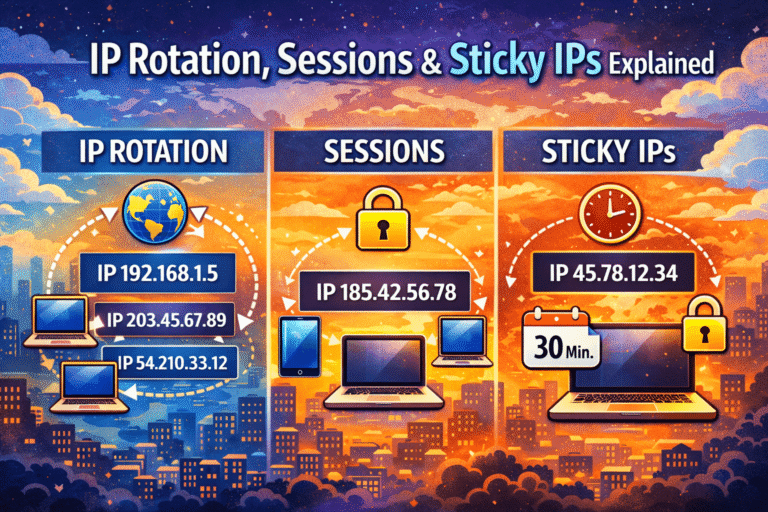
One of the fastest ways to trigger bans is aggressive or uncontrolled IP rotation. Many users assume that changing IPs frequently reduces detection risk. In reality, it often does the opposite.
From a platform’s perspective, rapid IP changes without corresponding session resets look unnatural. Cookies persist while the IP changes. TLS fingerprints stay the same while geography jumps. Account state remains intact while the network identity constantly shifts. These inconsistencies signal automation or abuse far more clearly than a stable IP ever would.
A proper setup aligns IP lifecycle with session lifecycle. If a session persists, the IP should persist as well. Rotation is useful only when sessions are intentionally short-lived and isolated. Otherwise, it creates a broken identity that platforms are trained to detect instantly.
Mistake #2: Mixing Proxy Traffic with Local Network Traffic
Another subtle but damaging mistake is leaking traffic outside the proxy tunnel. This often happens due to misconfigured applications, split tunneling defaults, or DNS requests resolving locally instead of through the proxy.
When a single session alternates between a proxy IP and a real IP, detection systems flag it immediately. The issue is not the proxy—it is the contradiction. A legitimate user does not change network identity mid-interaction.
This mistake is especially common in browser automation and desktop tools where only HTTP traffic is proxied, while WebRTC, DNS, or background requests bypass the proxy entirely. From the outside, the traffic looks fractured and untrustworthy.
A clean proxy setup ensures that all outbound traffic for a given session follows the same network path, including DNS resolution and auxiliary connections.
Mistake #3: Ignoring Geolocation Consistency
Geolocation is no longer evaluated in isolation. Platforms cross-reference IP location with language settings, time zones, regional endpoints, and behavioral timing.
A proxy in Frankfurt paired with a browser set to US English, Pacific Time, and US-only endpoints creates friction. None of these signals alone are suspicious. Together, they form an identity that does not naturally exist.
This is a common source of instant bans because it is easy to detect and difficult to explain away. Real users tend to have internally consistent regional signals, even when traveling.
High-trust setups align proxy location with system and application context. When they do not, detection systems assume impersonation or account sharing.
Mistake #4: Reusing the Same Proxy Across Unrelated Accounts
Proxy reuse is not inherently bad. What causes bans is unrelated identity reuse. When multiple independent accounts appear to originate from the same IP, with different fingerprints, behaviors, and usage patterns, platforms infer coordination.
This is especially risky with static or ISP proxies, which are often treated as higher trust. Once flagged, they tend to burn harder and faster than low-quality rotating IPs.
A sound setup maps one proxy identity to one logical user or workload. When proxies are shared, they are shared intentionally within a consistent behavioral model, not randomly across unrelated accounts.
Mistake #5: Using High-Quality Proxies with Low-Quality Clients
Detection systems do not evaluate proxies in isolation. They evaluate the entire request stack. A residential or ISP proxy does not compensate for broken TLS fingerprints, outdated cipher suites, or automation tools that leak obvious signals.
This mismatch causes confusion for detection models. The IP suggests a real user. The client behavior suggests automation. The contradiction results in fast blocking, often faster than if a datacenter IP had been used consistently.
High-trust proxies require equally high-trust clients. Browsers, libraries, and automation frameworks must align with the expectations set by the IP.
Detection, Trust, and Performance: How Mistakes Cascade
Most instant bans are not caused by a single red flag. They happen when multiple weak signals stack together quickly.
A rotating IP combined with persistent cookies.
A proxy IP combined with local DNS.
A residential address combined with robotic timing.
Each signal alone might pass. Together, they form a pattern detection systems are designed to stop early, before damage occurs.
Performance also plays a role. High latency, unstable connections, or frequent retries amplify suspicion. Systems interpret erratic network behavior as a sign of abuse infrastructure rather than genuine user activity.
Cost becomes a secondary issue at this point. Expensive proxies burn just as fast as cheap ones when configured incorrectly, making poor setups both ineffective and inefficient.
A Short Comparison: Fragile vs Resilient Proxy Setups
Fragile setups rely on rotation, randomness, and volume to stay ahead of detection. They change IPs frequently, reuse infrastructure loosely, and hope scale compensates for instability.
Resilient setups prioritize consistency. They maintain stable sessions, align network and client signals, and treat each proxy as a long-lived identity rather than a disposable resource.
The difference is not theoretical. In production environments, resilient setups last longer, cost less over time, and require fewer interventions.
Experience-Based Verdict
Most proxy bans are self-inflicted. They result from treating proxies as interchangeable tools instead of network identities with expectations attached.
A proxy, when configured correctly, does not attract attention. It behaves predictably, aligns with its environment, and fits naturally into the platform’s trust model. When configured poorly, even the best proxy becomes a liability.
Avoiding instant bans is less about chasing the “best” proxy type and more about respecting how detection systems interpret coherence. Stability, alignment, and intent matter more than rotation, novelty, or scale.
For anyone operating in the proxy and networking space, mastering setup discipline is not optional. It is the difference between infrastructure that quietly works and infrastructure that burns on first contact.