ISP Proxies Explained: Are They Really the “Best of Both Worlds”?
ISP proxies sit in an unusual position in the proxy ecosystem. They are often described as a hybrid between residential and datacenter proxies—offering the trust of residential IPs with the stability and speed of infrastructure hosting. That framing sounds attractive, especially for businesses struggling with detection issues but frustrated by the unpredictability of true residential networks.
But in practice, ISP proxies are neither a magic upgrade nor a simple midpoint. They behave differently from both residential and datacenter proxies in ways that matter for scraping, account management, automation, and transactional traffic. Understanding those differences is critical if you want predictable results instead of expensive trial and error.
This article explains how ISP proxies actually work, how they are detected, and where they make sense compared to residential and datacenter options. The goal is not to sell the concept, but to clarify the trade-offs so you can choose deliberately.
What Are ISP Proxies, Really?
At a technical level, ISP proxies use IP addresses that are officially allocated to consumer Internet Service Providers. These IP ranges belong to the same registries as home broadband users, which is why websites often classify them as “residential” traffic.
The difference lies in where and how those IPs are hosted.
Instead of being tied to a physical household connection, ISP proxy IPs are hosted on servers located in data centers or carrier-grade facilities. The ISP assigns blocks of IPs to the provider, and those IPs are then served from controlled infrastructure rather than from real end-user devices.
This distinction explains why ISP proxies feel stable like datacenter proxies but appear residential to many detection systems.
However, this also creates subtle fingerprints that matter at scale.
How ISP Proxies Behave in the Real World
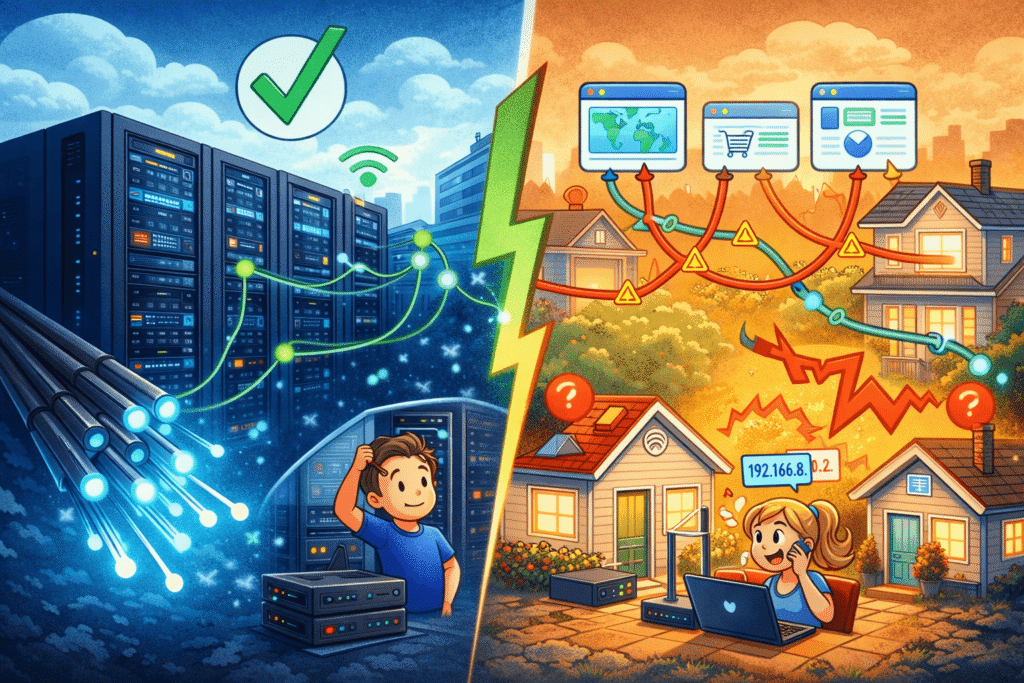
From the outside, ISP proxies tend to produce cleaner and more consistent traffic than rotating residential proxies. Latency is predictable. Uptime is high. Sessions remain stable for long periods without unexpected IP changes.
That makes them appealing for workflows where persistence matters—logins, carts, dashboards, and long-lived sessions that break easily when an IP rotates.
At the same time, they do not behave like organic household traffic. The IP might belong to Comcast, AT&T, or Deutsche Telekom, but the routing path, ASN behavior, and concurrency patterns look very different from a single family browsing the web.
Well-designed systems account for that difference.
Poorly-designed systems assume “residential = invisible,” and that assumption is where most problems begin.
ISP Proxies vs Residential Proxies
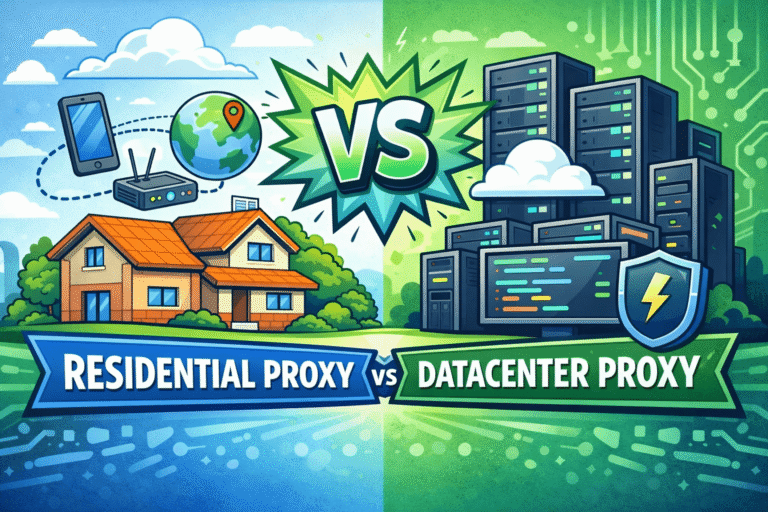
The most common comparison is between ISP proxies and true residential proxies, since both use ISP-owned IP space.
Residential proxies route traffic through real consumer devices—home routers, mobile connections, or peer nodes. As a result, their behavior is messy but natural. IPs change unexpectedly. Latency fluctuates. Sessions drop. From a detection perspective, this chaos is often an advantage.
ISP proxies are far more controlled. IPs are static or semi-static. Performance is consistent. You can open many parallel connections without worrying about a user turning off their router.
The trade-off is realism.
Residential proxies blend into consumer traffic patterns almost by accident. ISP proxies must be used carefully to avoid standing out due to usage intensity, timing, or protocol behavior. They offer trust at the IP level, but not necessarily at the behavioral level.
For low-volume, sensitive tasks, residential proxies remain harder to classify. For structured workflows that require stability, ISP proxies are often easier to operate safely.
ISP Proxies vs Datacenter Proxies
Compared to datacenter proxies, ISP proxies start with a major advantage: IP reputation.
Datacenter IP ranges are heavily cataloged. Many websites block them outright or apply aggressive challenges. Even clean datacenter IPs often face higher friction on login pages, checkouts, and account creation flows.
ISP proxies bypass many of those filters because the IP ownership matches consumer ISPs. That alone can significantly reduce friction.
Performance-wise, ISP proxies behave much closer to datacenter proxies than residential ones. They are fast, predictable, and scalable. For workloads that would crush a residential pool, ISP proxies are far more forgiving.
The downside is cost and availability. ISP IP space is limited, expensive, and harder to source legitimately. As a result, pools are smaller, pricing is higher, and replacement IPs are not always easy to rotate.
Datacenter proxies, by contrast, scale cheaply and endlessly—but at the cost of trust.
Detection: Where ISP Proxies Help—and Where They Don’t
Detection systems rarely rely on a single signal. IP ownership is just one layer.
ISP proxies pass the first layer easily. They often bypass basic IP-type checks that flag hosting providers and cloud ASNs. For many sites, that alone is enough to allow access.
More advanced systems look deeper.
They analyze connection density, session reuse, browser fingerprints, timing consistency, and protocol quirks. ISP proxies used aggressively can still trigger alarms, especially when many accounts or actions originate from the same small IP pool.
In practice, ISP proxies reduce detection risk compared to datacenter proxies, but they do not eliminate it. They reward careful traffic shaping and punish brute-force usage.
Trust and Reputation Over Time
One overlooked advantage of ISP proxies is reputation longevity.
Residential IPs rotate constantly, which makes reputation irrelevant. Datacenter IPs often burn quickly and never fully recover. ISP proxies sit in between. Because they are static and tied to ISPs, reputation builds over time—both positively and negatively.
Used responsibly, ISP proxies can become “warm” assets that perform better the longer they are used. Misused, they can become permanently flagged and difficult to replace.
This makes them a poor fit for disposable tasks, but a strong fit for long-term operations that value consistency.
Performance and Stability Considerations
Performance is one of the clearest wins for ISP proxies.
Latency is typically low and stable. Packet loss is minimal. Long-running sessions are reliable. This matters for applications that are sensitive to interruptions—automation frameworks, API-heavy workflows, or browser-based tasks that span minutes rather than seconds.
Residential proxies struggle here by design. ISP proxies remove that instability without fully reverting to the detectability of datacenter infrastructure.
If your workload breaks when an IP changes unexpectedly, ISP proxies often feel like a relief.
Cost: The Quiet Trade-Off
ISP proxies are rarely cheap.
They cost significantly more than datacenter proxies and often more than standard residential traffic when measured per IP. Pricing models vary—some charge per IP, others per bandwidth—but the common thread is scarcity.
You are paying for IP space that looks residential but behaves like infrastructure.
For teams that can monetize stability or reduced friction, the cost makes sense. For exploratory scraping or low-value automation, it usually doesn’t.
A Short, Practical Comparison
In simple terms:
- ISP proxies trade realism for control.
- Residential proxies trade control for realism.
- Datacenter proxies trade trust for scale and price.
None of these is objectively “better.” Each aligns with different risk profiles and operational priorities.
When ISP Proxies Actually Make Sense
ISP proxies shine when you need residential trust without residential chaos. Account management, authenticated sessions, and workflows that require consistency are common examples.
They are less suitable for high-churn scraping, mass automation, or anything that relies on frequent IP rotation to stay ahead of detection systems.
Used thoughtfully, they can be a strategic asset. Used blindly, they become an expensive disappointment.
Verdict: Are ISP Proxies the “Best of Both Worlds”?
ISP proxies are not the best of both worlds—but they are a carefully balanced compromise.
They reduce the blunt-force blocking that affects datacenter proxies while avoiding the unpredictability of residential networks. In return, they demand discipline, realistic traffic patterns, and a willingness to pay for quality.
For serious, long-term proxy use where stability and trust matter more than raw scale, ISP proxies often justify their reputation. For everything else, they are simply one option among many—and not always the right one.
Understanding that distinction is what separates effective proxy strategies from costly experiments.